Implant Dentist in Turlock, CA
The dentist who plans your implants is the dentist who places them and fits the teeth on top.
Medically reviewed by Dr. Broneil Ishaya, DDS — Fellow, Misch Resnik Institute of Implantology · Oct 2026 · Written by Dr. Ishaya
In short: An implant dentist in Turlock is the dentist who diagnoses why teeth are missing or failing, plans the implant positions on a 3D scan, places the implants and fits the final teeth; at this practice that is Dr. Broneil Ishaya, DDS. He performs every stage himself at 1801 Colorado Ave., Suite 280, so nothing is handed between offices. The consultation that starts it is free and includes the scan the plan is built from.
Who places implants at this practice
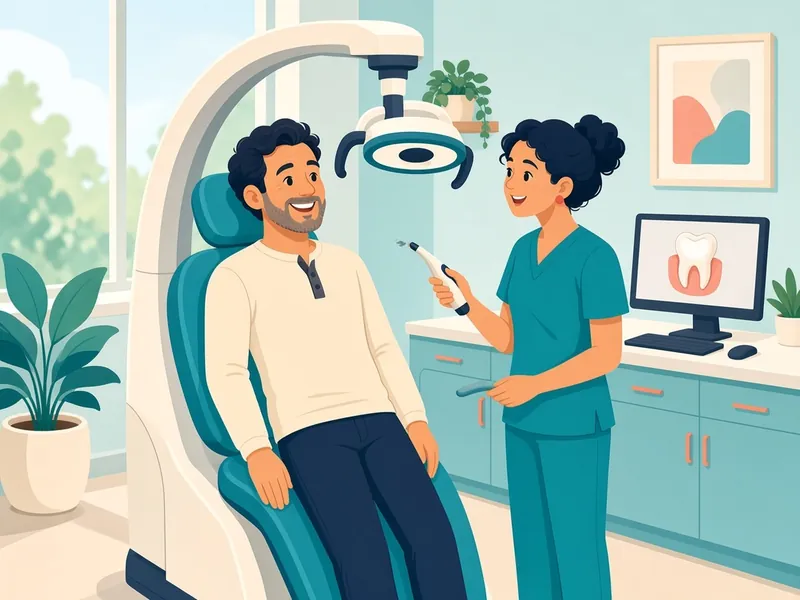
Dr. Broneil Ishaya, DDS places implants here, and he is also the dentist who assesses you, designs the plan and fits the crown, bridge or arch that goes on top. One clinician carries the case from the first scan to the last review appointment.
That continuity has practical consequences. When the person who placed an implant also designed the tooth that sits on it, the implant position is chosen for the tooth rather than the other way around: angulation, the depth of the platform below the gum, and the space left for the restorative components are all settled at planning, by the hands that will later work in that space.
The alternative is a handoff: a surgeon places the implant and sends a report, and a separate dentist discovers at the restorative stage that it emerges at an awkward angle. It usually still works, but it costs time and money.
What an implant dentist does, and how that differs from an oral surgeon
An implant dentist plans the implant, places it and builds the tooth that sits on it, where an oral surgeon or periodontist typically places the implant and returns you to your own dentist for the restoration. Both are trained to put an implant in bone; the difference is where the case is divided.
Oral surgeons and periodontists are specialists, and their training goes deeper than a general dentist's into bone grafting, soft tissue surgery and the management of medically complex patients. For a large block graft, a sinus floor elevated through a lateral window, or a patient whose medical history makes an office setting unwise, a specialist is the right referral and this practice makes it.
A general dentist with formal implant training plans and places the whole case in one office. That suits most implant work: single teeth, short bridges and full arches where the bone is adequate or can be rebuilt with routine grafting, with one estimate, one surgical appointment and no records travelling between buildings.
Both models produce good implants, and competence is a property of the clinician rather than the title on the door. What you are choosing between is continuity and convenience on one side and specialist depth on the other. The treatment pages set out what each option involves.
Training and credentials
Dr. Ishaya earned his dental degree at UC San Francisco and completed a Fellowship in Implantology at the Misch Resnik Institute, and he has practiced in his hometown of Turlock since 2020.
The fellowship is the part worth explaining. A dental degree teaches implant dentistry as one subject among many; a fellowship in implantology is postgraduate training concentrated on it, covering diagnosis and planning, bone and soft tissue surgery, the prosthetics that sit on the implants, and the complications that follow when any of those go wrong. The Misch Resnik Institute is named for the Misch implant philosophy, which treats the prosthetic outcome as the thing the surgery serves, and that ordering shows in how cases are planned here.
Before any of that, he grew up in his father's dental laboratory in Turlock, learning from about the age of twelve how a replacement tooth is shaped, shaded and finished. That laboratory is still part of the work: the crowns, bridges and arches patients receive here are made with Golden Valley Dental Lab.
He belongs to the American Dental Association, the California Dental Association, the Stanislaus Dental Society and the Academy of General Dentistry. More about Dr. Ishaya and the office.
Guided implant surgery
Guided implant surgery places the implant through a surgical guide built from your scan, so the drill enters at the angle and depth the plan set rather than where the site looks right by eye.
It begins with a cone beam CT (CBCT) scan, a low-dose three-dimensional X-ray of the jaw taken in this office. From it, Dr. Ishaya maps bone height, width and density and locates the inferior alveolar nerve in the lower jaw and the sinus floor in the upper. The implant position is designed in that three-dimensional image and, where a guide is appropriate, the design is used to make a stent that carries the drills along the planned path.
The practical effect is accuracy where the margin for error is small: a site beside a root, an immediately replaced socket, or a full arch where four implants must share a load predictably. It often allows a smaller flap, and patients commonly report less swelling than they expected.
It is not used for every case. A guide adds planning time and laboratory cost, and where the anatomy is forgiving and access is straightforward, freehand placement is sound. Which applies to you is decided from your scan and exam, and the reason is given to you.
Comfort and sedation
Nitrous oxide and oral conscious sedation are both available for implant appointments here, and which suits you is a clinical decision rather than a preference.
Nitrous oxide, usually called laughing gas, is breathed through a small nasal mask and takes the edge off without putting you to sleep. It acts within minutes, is adjustable while you are in the chair, and wears off quickly enough that most people drive themselves home and return to a normal day. It suits a patient who is tense about the appointment or has a strong gag reflex.
Oral conscious sedation is a prescribed medication taken before the appointment. You stay awake and able to respond, but deeply relaxed, and many patients remember little of the visit. It is the option for someone genuinely frightened of dental treatment or facing a long surgical appointment. You will need a responsible adult to drive you home, and you should not drive, work or make decisions for the rest of that day.
Both are monitored, and both need an honest account of your medications at the consultation. Ask about sedation when you book so the appointment is long enough to use it.
What happens at your first visit
Your first visit is a free consultation that includes a 3D cone beam CT scan, an iTero digital scan, an exam, and a written plan with an itemized estimate before you leave.
The CBCT shows the bone in three dimensions and the structures to avoid; the iTero scanner takes a digital impression without putty trays. Dr. Ishaya examines the site, the gum and the adjacent teeth, and asks about your medical history, your medications and what you want the result to do. Photographs are added where the case calls for them, which is usual at the front of the mouth or for a full arch.
The plan names the treatment, the sequence, the alternatives and an itemized estimate with each procedure and laboratory step on its own line, plus what it excludes. There is no obligation to begin. The consultation step describes what to bring; book online or call (209) 216-3530.
Insurance and paying for treatment
The practice accepts most PPO dental plans, and most plans now contribute something toward implant treatment. What a plan pays depends on how it classifies the implant, the restoration and any grafting, on your annual maximum, and on whether pre-authorization is required before surgery.
Bring your insurance card to the consultation and we will work through the benefit breakdown with you at no charge, so you know what your plan would cover and what the balance would be before you commit to treatment. If you do not have dental insurance, ask about the current offers for patients paying without a plan.
Common questions
Do I need a referral to see an implant dentist?
No. You can book a consultation at this practice directly, without a referral from another dentist or physician. Bring any X-rays or records you already have and they will be read alongside the scan taken here.
Is a general dentist as good as a specialist for implants?
For most single teeth, bridges and full arches, a general dentist with formal implant training plans, places and restores the implant to the same clinical standard a specialist works to. Specialists remain the right call for the most involved grafting and for medically complex patients, and this practice refers those cases on.
How long does implant treatment take?
Most cases run several months from surgery to final teeth, because the bone needs that long to fuse to the implant surface before it carries a crown. Grafting, a sinus lift or an extraction first adds time. Your own timeline is set at the consultation.
Does implant placement hurt?
Placement is performed under local anesthesia, so the surgery itself is not painful. Most people have a few days of soreness and swelling afterward, managed with medication prescribed for you.
Is sedation available for implant treatment?
Yes. Nitrous oxide and oral conscious sedation are both available here, and Dr. Ishaya is licensed to provide them. Nitrous oxide wears off quickly; oral conscious sedation suits longer or more anxiety-provoking visits and requires a ride home afterward.
Whether implant treatment is right for you can only be decided after an exam. Every case differs, and results vary.
Sources
Meet the dentist who would place your implants.
Book a free consultationAll-on-4® is a registered trademark of Nobel Biocare; the term is used here only descriptively for full-arch treatment on a few implants. This site is not affiliated with Nobel Biocare. iTero® is a registered trademark of Align Technology, Inc.; This site is not affiliated with Align Technology.